Auto Europe



- Compare Companies for the Best Rates
- Free Cancellation up to 48hrs before Pick up
- No Credit Card Fees
- Available 7 Days a Week
- 28,000 Pick-up Locations Worldwide
Travel Guide Norway - useful journey information
With an abundance of fjords, glaciers and snow-topped mountain districts, Norway is all about travelling around and appreciating the great outdoors. It's also a place that scores many points culturally, with a number of the world most impressive and technologically-advanced museums and cultural centres located in towns and cities all over the country. Use your car hire in Norway to see centuries-old Viking ships, preserved medieval stave churches and impressive collections of art and rare items of treasure in some of Norway's most remote locations.
Planning a trip to a new country is exciting but sometimes involves quite a lot of effort. Auto Europe boasts over 60 years in the car rental industry and will provide you with the best car hire offers, with the friendliest support and with plenty of information about car rental and your travel destination. Drive around this amazing country starting from the capital city Olso and head towards the stunning panoramas offered by the fjords in the south-western part of the country, mostly concentrated on the coast between Stavanger and Bergen. If you fancy covering very long distances you can drive north and arrive up to Tromso, where you will be able to admire the Northern Lights and Norway's golden Midnight Sun.
Auto Europe provides you with an extensive travel guide for Norway that will save you a lot of research. Here you will not only find a list of the must-sees and must-dos but also find an answer to the main FAQs about this wonderful Scandinavian country.
Look over the Norway travel guide topics listed below and take a look at each page for information on a specific aspect of traveling in Norway.
- Norway Car Hire Guide - This guide offers you a full overview of everything you need to know when hiring a car in Norway.
- Norway Driving Information - Learn helpful information about driving in Norway. From tips and driving laws, to speed limits, parking, and more.
- Norway Fleet Guide Options - Information about our car hire options for your trip to Norway.
| Road Trips | Attractions | Travel FAQs |
Road trips with my car hire in Norway
Norway, together with the other Scandinavian countries, stands out for its high quality of living but most of all for its uncontaminated and wild nature. Summer months are the best to visit because of the milder weather conditions, but at any time this country will surprise and please you. The world-famous fjords and the Norwegian fish will top your experience.
Below we prepared some road trips suggestion concentrating on the southern and northern parts of the country. These trips will take a minimum of two days, so look for accommodations conveniently placed on the way. If you travel from north to south or vice versa you should seriously consider a one-way car hire, meaning with drop-off in another city so you can possibly fly back and spare the long return drive. In this case the booking will be on request so that our car rental agents can check availability and the exact amount of the one-way fee.
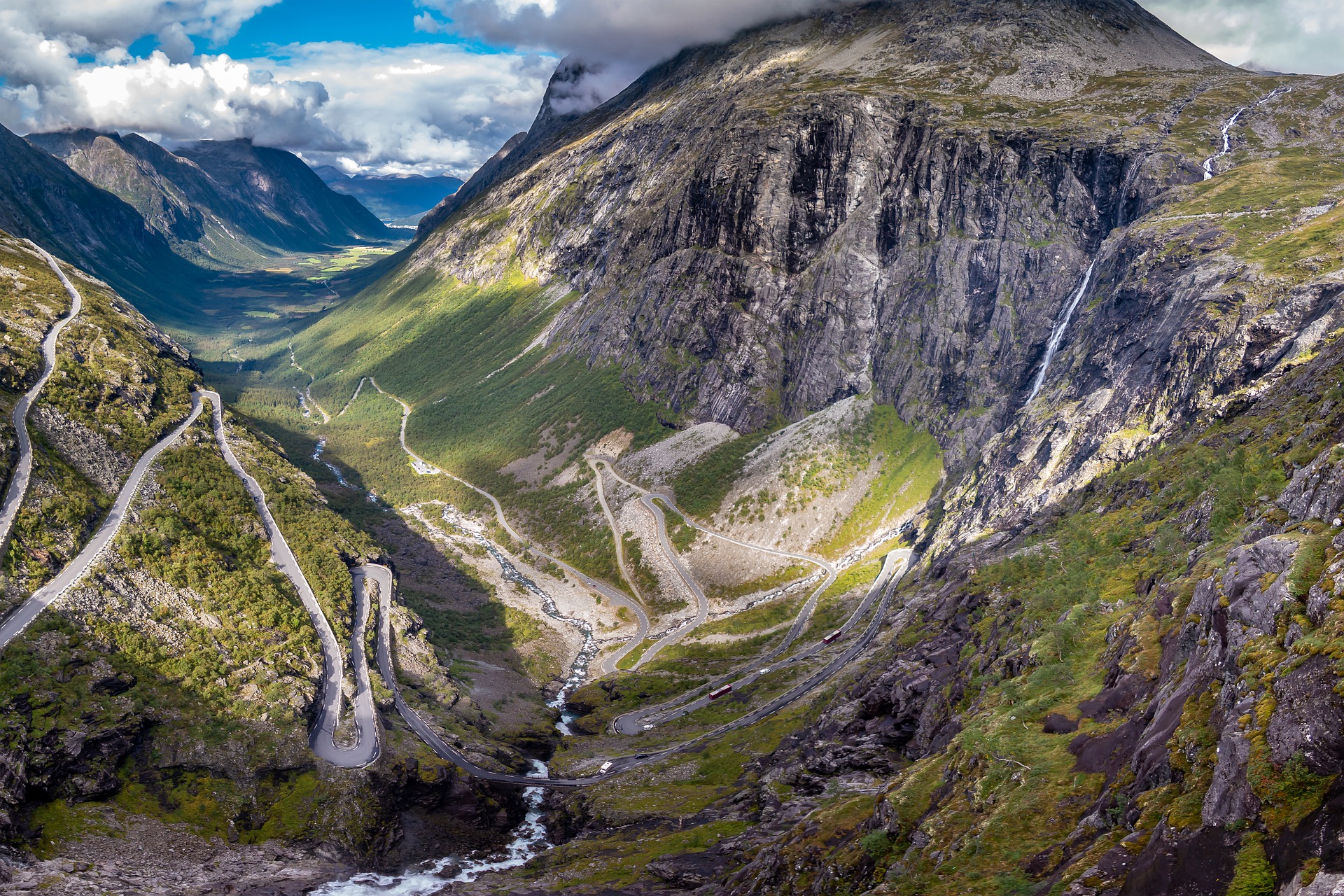 When short of time or in need of an escape from the capital a round trip in the vicinities of Oslo bears also its satisfactions. Your first stop can be Geilo to ski or at one of the two national parks close by, Hallingskarvet and Hardangervidda to hike. You can then proceed to Flåm and the surrounding fjords to relax in the nature. On the second day you will reach the highlight of the trip: the Geirangerfjord, which is not surprisingly a UNESCO World Heritage Site. Here the motto is soak in this fantastic scenery, by doing open air activities or just chilling. Should you be interested, nearby there is the Jostedalsbreen National Park. Trollstigen will be the next stop and the road there, the famous “Troll’s Road” with its sharp bends winding up a steep mountain is the real experience. With the heart full of impressive views you can then return to Oslo.
One of the areas with the highest concentration of beautiful fjords is close to Bergen and is called Nordfjord/Fjordkysten Region. Your road trip begins in Bergen and heads to Kalvåg, a village surrounded by water where you can go kayaking, visit the herring factory or even join a fishing or sailing boat. Thirty minutes away, in Grotle you will find a dreamy beach with white sand and turquoise water. You can crown your drive with a visit to Hornelen, which is the highest sea cliff in Europe.
A good alternative or a perfect complement to the above itinerary it the scenic Ryfylke Route, covering the most southern tip of Norway. As starting point you can take Oanes, near Stavanger. Here you can admire the Lysefjorden, looking up to impressing Preikestolen cliff and the Kjerag Mountain. Then continue north and at Lovra in Suldal you can choose between going west or east. We advise you to take west so that you can follow the fjord and arrive directly to the Svandalfossen waterfall. Eastwards the road leads to the barren mountains and can be more demanding.
The Kystriksveien seaside road along the Nordland coastline is an exhilarating 400-mile trip and, according to National Geographic magazine, one of the world’s most scenic car journeys. Kystriksveien has many tourist highlights, including Norveg (a coastal heritage centre), the Petter Dass Museum (named after the 17th-century priest and poet), the Lovund Puffin Colony (over 200,000 of them) and the Norwegian Aviation Museum, the largest of its kind in Scandinavia. Don’t miss the island of Vega just south of the Arctic Circle where the local residents still make a living from fishing and harvesting the down of eider ducks. There’s very little traffic on this route, even in high summer, so you are guaranteed a stress-free journey and the frequent ferry hops make for an interesting detour.
And the further north you travel in Norway, the greater the chance of seeing the greatest light show on earth – the staggeringly beautiful Aurora Borealis. Caused by charged particles emitted by the sun colliding with earth's upper atmosphere, it’s possible to see it all year round but the most spectacular Northern Lights (as this incredible phenomenon is otherwise known) appear on the darkest of winter nights far away from any towns or cities.
What to do in Norway
Magical Norway not only offers the thrill of seeing the elusive Aurora Borealis but also the chance to experience outstanding scenery and some of the world's best ski resorts. Besides offering the very best of the famous Nordic charm, visitors have a plethora of outdoor pursuits at their disposal, including snow-boarding, dog-sledding, whale-watching and extreme skiing. The country's Viking history is another major highlight for people travelling around in their car rental in Norway, particularly in and around the coastal inlets of the southern and south-western shorelines from where they launched their trademark long-ships as part of their quest for world domination.
- Norwegian Glacier Museum: Centrally located in Fjærland, to the north-east of Bergen, the Norwegian Glacier Museum & Ulltveit-Moe Climate Centre is an interactive museum for the whole family. Housed in an innovative building in a truly magnificent location, the museum explores a diversity of themes, including how glaciers have been formed since the creation of the planet through to the last ice age and beyond with a particular focus on climate change.
- Oslo: One of Europe’s most affluent cities, Oslo has a wealth of attractions to suit all tastes, from first-rate museums and cultural centres to dazzling seascapes and an eclectic mix of old and new architecture. Visit the popular Viking Museum where you can learn all about Norway’s ancient past, or the Kon-Tiki Museum depicting Thor Heyerdahl’s historic voyage across the Pacific on a balsawood raft. After that, take a leisurely stroll along the waterfront to see the city’s famous opera house (one of the world’s finest) before visiting the impressive National Gallery and the magnificent Royal Palace.
- Bergen: One of the best-preserved ‘timber-towns’ in the whole of Scandinavia, Bergen is famous for its historic waterside district called Bryggen, which was classified as a UNESCO World Heritage site in 1979. Another major tourist attraction is the Floibanen funicular railway which links the old town with Mount Floyen, a spot particularly popular for its head-spinning views. Surrounded by the Seven Mountains, Bergen's trading roots stretch right back to the early 11th century and today the city is a popular gateway to the Norwegian Fjords which attract thousands of road-trippers every year.
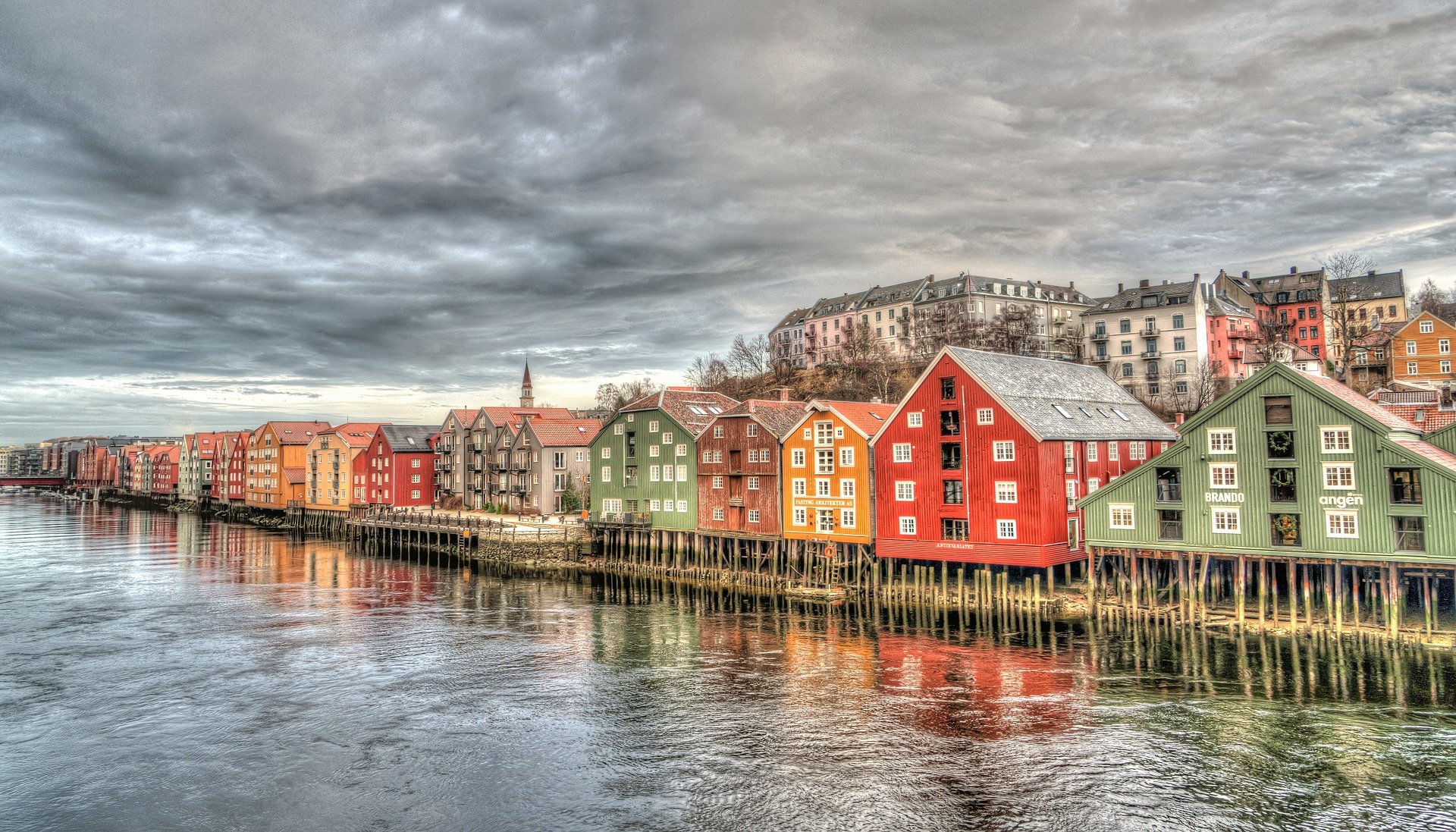
- Trondheim: The old city of Trondheim in the north of Norway is worth visiting for its huge and very ancient cathedral (the largest in Scandinavia) where the country’s patron saint, St Olaf, is buried. Its historic centre is another star attraction and an area perfect for a leisurely stroll amongst the city's many bars, cafés, restaurants and trendy boutiques. Other unmissable sights include the National Museum of Decorative Arts, Trondheim Museum of Art, Archbishop’s Palace Museum and, in stark contrast, Rockheim, Norway’s national museum of popular music.
- Stave Churches: Norway’s fine medieval stave churches (the word ‘stave’ relates to the architectural style of timber framing) provide plenty of side attractions for visitors travelling around the country. Originally far more widespread, the few that remain date back to the 15th century and are most striking for their towering design, particularly the Heddal stave church in Notodden to the west of Oslo, the largest in the country.
Frequently Asked Questions about travelling in Norway
Beside the extensive travelling tips we have listed above we have alos gathered some frequently asked questions like what car type is bets fro your trip along with informatation on Visa restrictions, currency and much more. We also prepared a more general travel tips page focused on insurance types, age and driving restrictions, as well as anything related to the car hire process. Please remember that if you still have further questions or doubts you should call our dedicated reservation agents who will be glad to assist you every day of the week.
What type of car hire is best for your trip to Norway?
The kind of stay and journey you are planning for your visit to Norway is going to primarily determine the type of vehicle you will need to rent. Business travellers that move around the bigger cities are recommended to go for more spacious and comfortable models such as SUVs or sedans. If you will be driving extensively around the country, crossing mountainous areas or taking narrower roads you should opt for one of our more powerful SUV models. For larger groups up to 12 people there are of course modern vans at disposal. Specific demands such as for luxury cars or campervans are also catered for by Auto Europe.
To get a better picture of all the car models you can choose from, please have a look at our car hire category page with brief but very clear descriptions. If you are still not sure about the best car model for your trip, please call our reservation agents and ask for advice.
What is the currency in Norway?
Norway uses the Krone as the basic form of its currency, called kroner in plural. Currency exchanges can be made in exchange bureaus or in tourist information offices. ATM units can allow you to withdraw cash from your home account. Many establishments accept credit cards, including Visa, Eurocard, Mastercard, Diner's Club and American Express.
What time zone is Norway in?
The time zone in Italy is GMT +1, making Rome one hour ahead of London, for example. This time zone also includes Italian islands, such as Sicily and Sardinia. Daylight Saving Time applies to all of Italy, from the last weekend in March to the last weekend of October.
Electricity – Do I need a power adapter in Norway?
Norway powers its sockets with 220 volts at 50-60 Hz, same as in the UK. However, the outlets will not be the same as Norway uses the Europlug (Type C & F) so you may need an adapter if you plan to travel with any electrical appliances.
Do I need a visa to travel to Norway?
No, till 31st December 2020, that is the last day of the Brexit transition period, a passport will be enough. After the 1 January 2021 some restrictions will come into place. UK citizens will still be able to travel without the need of visa to the countries belonging to the Shengen area for up to 90 days in any 180-days period and for purposes such as tourism.
Once arrived in Norway at the customs you could be asked to prove you have enough money for your stay or to show an onward or return ticket. Before leaving you should also check the validity of your passport during your period of stay. Reading the official UK Government page for up to date travel requirements is highly recommended due to the on-going changes.
If you need help from the consulate during your stay in Norway you contact or go in person to the British Embassy in Oslo. Below you will find the contact details and address:
British Embassy Oslo
Thomas Heftyes gate 8
0244 Oslo, Norway
Website: www.gov.uk
Telephone: +47 23 13 27 00
Which are the most common phrases in Norwegian?
Hello - Hallo
Good morning - God Morgen
Good afternoon - God Ettermiddag
Good evening - God Kveld
Where is the closest police station? - Hvor er nærmeste politistasjon?
Where is the closest hospital? - Hvor er nærmeste sykehus?
Where is the closest ATM machine? - Hvor er det nærmeste minibank?
Where is [location]? - Hvor er [location]?
Can I pay by credit card? - Kan jeg betale med kredittkort bil?
Can I pay by debit card? - Kan jeg betale med debetkort?
How much does this cost? - Hvor mye koster dette?
Thank you - Takk
Keep the change - Behold veksle
Useful Links
- Home
- Car Hire Destinations
- Norway
- Norway Travel Information