Auto Europe




- Compare Companies for the Best Rates
- Free Cancellation up to 48hrs before Pick up
- No Credit Card Fees
- Available 7 Days a Week
- 28,000 Pick-up Locations Worldwide
Travel Guide Spain - get inspired for your trip
Spain is the classic all-round travel destination that has everything in abundance. Covering some half a million square-kilometres - about twice the size of the UK - it has a great heritage and a long history as well as an astonishing variety of regions and landscapes. Few places in Europe are blessed with such a huge amount of road-trip potential, with several tried and tested driving itineraries covering every part of the country, including the Basque Country, Montes de Cantabria region, Catalunya, Castilla y León, La Mancha and Extremadura, not to mention the deeply-indented Galicia coastline.
With a car hire from Auto Europe you'll be able to see Roman monuments, gracious cathedrals, fine examples of Baroque architecture and hundreds of picture-book villages dotted around the country. You'll pass snow-capped mountains featuring world-renowned ski resorts and drive for hours across vast sun-baked plains punctuated by charming hilltop fortresses. You won't want to miss the many museums of Madrid nor the great Guggenheim in Bilbao, one of the world’s best. And you haven’t lived if you haven’t taken a long, leisurely stroll down Barcelona’s famous La Rambla thoroughfare before a hearty meal in one of the city’s numerous backstreet eateries.
You’ll find all the info you need for an enjoyable trip in our comprehensive travel guide to Spain, whether you’re planning a few days’ sightseeing in Madrid, a leisurely drive along the country’s Atlantic and Mediterranean coast-roads or a grand tour of Andalusia, one of southern Europe’s most varied and picturesque tourist regions.
Look over the Spain travel guide topics listed below and take a look at each page for information on a specific aspect of traveling in Spain.
- Spain Car Hire Guide - This guide offers you a full overview of everything you need to know when hiring a car in Spain.
- Spain Driving Information - Learn helpful information about driving in Spain. From tips and driving laws, to speed limits, parking, and more.
- Spain Fleet Guide Options - Information about our car hire options for your trip to Spain.
| Road Trips | Attractions | Travel FAQs |
Road trips with my car hire in Spain
Once you have picked up your car rental in Spain, you’d be well advised to get off the beaten track in order to discover some of the lesser-known jewels in this wonderful country. Our comprehensive road-trip section highlights a few of the most interesting routes you can take when exploring Spain by car, each with a succession of fascinating sights, attractions and stopover suggestions that can be enjoyed at any time of the year.
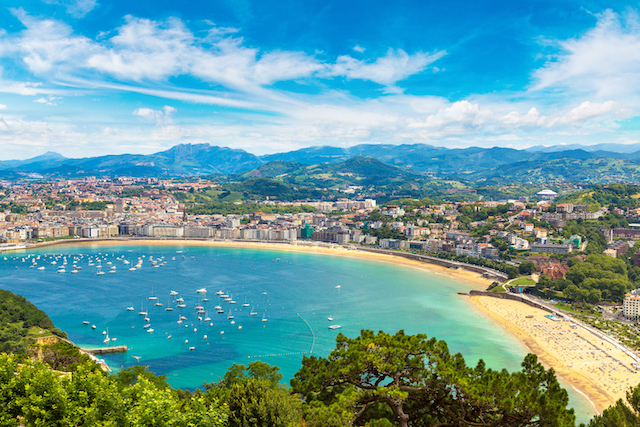 No road-trip through the north of Spain is complete without a tour of the Basque Country, an ancient land of excellent beaches, fine cuisine and some of Europe’s most impressive modern architecture. Besides enjoying the best of Spain, a drive around the Basque Country provides good access to neighbouring France and the Pyrenees Mountains souring high above the Atlantic. Don’t miss San Sebastián, a relaxing seaside resort nestling comfortably on the Bay of Biscay, and the bustling cultural city of Bilbao, home to the world-famous Guggenheim Museum.
A car journey through central Spain promises some of the best sightseeing opportunities in the whole of southern Europe, most notably in and around the country’s magnificent capital, Madrid. Home to many first-class museums and monuments, Madrid is both the geographical centre and cultural hub of the country with its origins dating back almost 1,200 years. It is also the perfect base from which to discover nearby Toledo and several other must-see places such as Salamanca and the walled city of Avila.
Travellers to southern Spain have all the attractions of the Seville-Córdoba-Granada triangle at their disposal with a road–trip through the enchanting Andalusia region a major highlight for visitors to this part of the country. Never to be missed is Seville, a compact city harbouring hidden plazas and a maze of picturesque alleyways set around a huge Gothic cathedral. Other notable treasures within easy striking distance of Seville include Córdoba (a city renowned for its glorious mosque and distinctive Moorish patios) and Granada, famous for the Alhambra palace and fortress complex built in 889 AD.
Another popular option for travellers to the north-east of Spain is a relaxing drive through Catalonia, incorporating the remarkable city of Barcelona, a major centre for sport, commerce and culture. But there’s much more to Catalonia than Barcelona; it’s a region tailor-made for road-trips along the scenic Costa Brava shoreline, with the French Riviera nearby on the other side of the border. Tucked away in the Pyrenees Mountains, Andorra is a small but very appealing place for a peaceful stopover for skiing and shopping in close proximity to the Costa Brava.
What to do in Spain
There’s much to see and do in sunny Spain, not forgetting the beautiful Balearic and Canary Islands in the Mediterranean and Atlantic, respectively, so to get you started on your journey we’ve listed a few things you might want to consider for your car hire itinerary, if time permits.
- Alhambra (Granada): Built in the 9th century AD, the Alhambra is a truly sensual piece of ancient architecture and arguably Spain's most striking monument. A mix of palace and fortress, it is even more remarkable for the fact that it was constructed with the most modest materials – plaster, timber and tiles. With its red towers dominating the Granada skyline, the Alhambra affords outstanding views of the city and stands proud as an enduring symbol of more than 800 years of Moorish rule.
- Madrid: One of Western Europe's fine art capitals, Madrid was once a small Castilian town of little importance until King Felipe II chose it as his capital in 1561. A major draw for tourists today is the city’s golden sightseeing triangle in the city centre comprising several world-class galleries, cultural centres and museums, including the Museo del Prado, Centro de Arte Reina Sofía and Museu Thyssen-Bornemisza, all conveniently located within a stone's throw of each other.
- Mezquita (Córdoba): A must-see attraction in the south of Spain is Córdoba's stunning Mezquita, which features a rich mix of Western, Islamic and, in some parts, Roman architecture. Abd al Rahman built the original mosque in the 8th century AD and the city soon started to prosper as the western capital of the Islamic empire. Don’t the miss its uniquely-decorated interior or the head-spinning city views form the 93-metre-high Alminar bell-tower.
- Tapas (everywhere): Your home town's Spanish eatery is probably a poor imitation at best, so be sure to go to the root source of one of the world's great culinary successes and spend a couple of hours in a backstreet tapas bar, most famously in the dense concentration around Madrid's lively Barrio de La Latina (Latin Quarter). There's sure to be one a few steps from your hotel and the choice of mouth-watering delicacies will almost certainly include patatas bravas (fried potatoes served in a spicy sauce), gambas al ajillo (prawns in garlic) and albondigas (Spanish meatballs). Learn all about the delicious Spanish snack in our two part tapas guide.
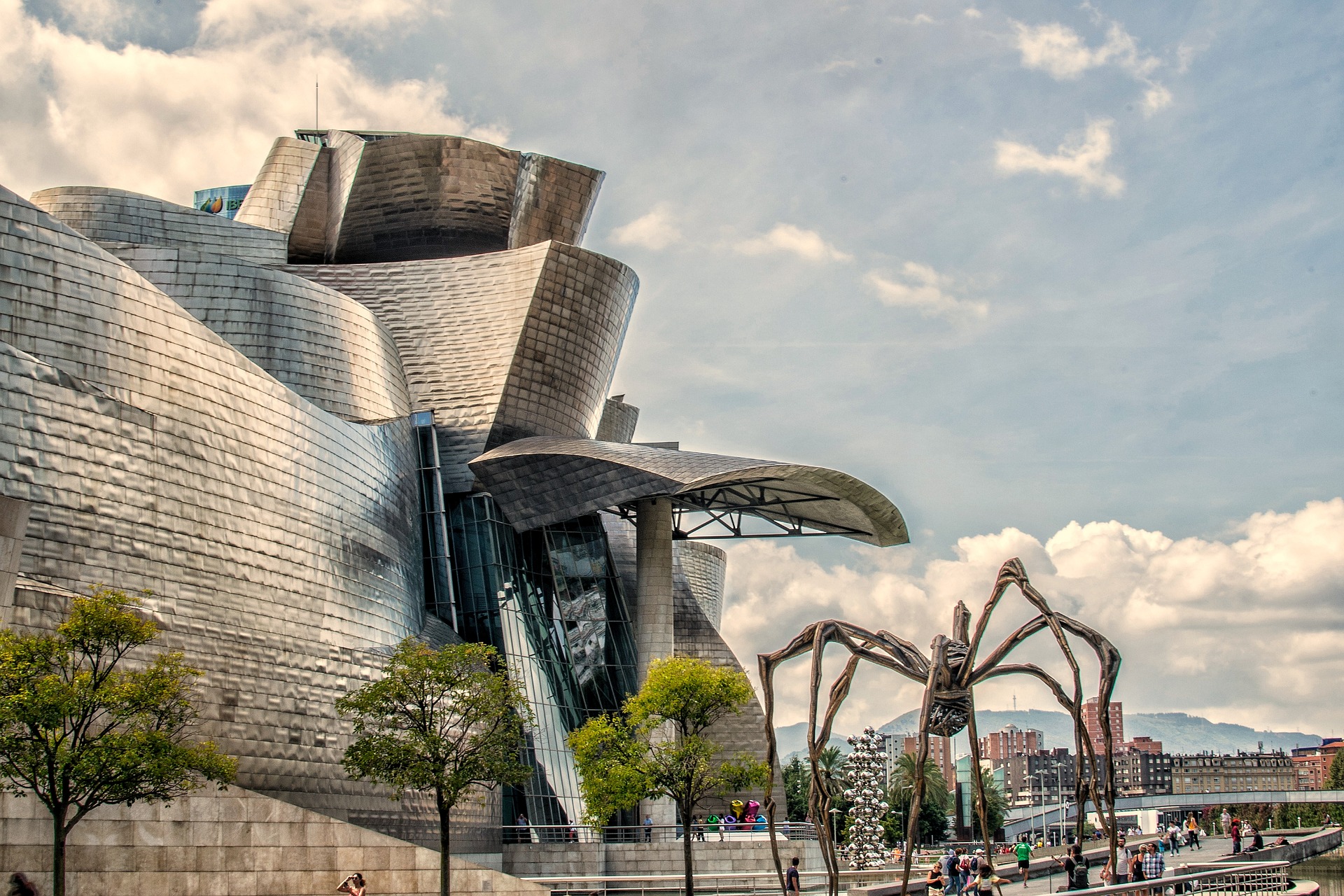
- Guggenheim Museum (Bilbao): An astonishing structure of limestone, glass and titanium, the futuristic Museo Guggenheim designed by top architect Frank O. Gehry features a superb collection of both modern and contemporary art. Almost twice as large as its counterpart in New York, it covers an area of around 11,000 square-metres across three floors, with several additional spaces available for temporary exhibitions and special events.
A bit of history
After the fall of the Roman Empire in the 5th century AD, Spain was ruled by the Visigoths who had migrated from central Europe. In 711, the Muslims of North Africa launched an invasion across the Strait of Gibraltar, occupying most of the Iberian Peninsula within years and their presence was to last more than seven centuries. Christian forces to the north began to increase in strength over forthcoming generations and they gradually drove the Moors southwards, eventually conquering the last Moorish stronghold in Granada in 1492. The discovery of the New World by Christopher Columbus and the expulsion of the Moors from Spain proved to be major milestones in the country’s history. Riches from Spain's vast overseas empire further elevated its status but constant warfare began to drain its essential resources. With the accession of the Bourbon dynasty to the Spanish throne at the beginning of the 18th century, Spain came within the French sphere of influence for more than 100 years, up to the defeat of Napoleon's army during the Peninsular War. In 1931, King Alfonso XIII was forced to abdicate and Spain was declared a republic, sparking the Spanish Civil War which lasted from 1936 to 1939. With the death of Franco in 1975, the country returned to being a constitutional monarchy the following year and its economy grew sharply, with Spain subsequently joining the EEC (EU) in 1986 and the Eurozone in 1992.
Frequently Asked Questions about travelling in Spain
Spain as a destination has no shortage of road-trip potential, but it’s possible you might have some questions or require further information when planning your travel itinerary or renting your car. For this reason we have compiled the following FAQ section to help get you where you want to go as quickly as possible, whether you’re organising a relaxing beach holiday on the Costa Brava or a fun-filled break with friends in Fuerteventura. All you need to know is right here in this section, so scroll down to learn some of the most common phrases in the Spanish language and find out whether or not you’ll need a visa to visit this amazing country. For more information about driving abroad, please consult our special section for more practical advice and useful travel tips.
What type of car hire is best for your trip to Spain?
When planning a road-trip in Spain, it’s important to choose the right kind of vehicle for your journey. For sightseeing in and around the historic centres of Madrid and Barcelona, for instance, we would suggest something small and manoeuvrable from our Mini and Economy categories to help you navigate your way around those old city streets. Combining a busy city sightseeing programme with a drive down the coast or into the vast Andalusia or Catalonia interior would require a more spacious, comfortable vehicle which you’ll find in our Compact and Intermediate categories. For northern Spain and the islands of Ibiza and Mallorca, why not treat yourself to something more sumptuous from our Luxury and SUV categories. These cars are designed for travelling further afield and exploring the more rugged and mountainous areas of northern Spain. Some car categories offer more luggage space, while others feature vehicles with larger, more powerful engines. To find out which one is most appropriate for your forthcoming trip, please consult the Auto Europe car hire categories page for full details.
What is the currency in Spain?
Spain adopted the euro on the 1st of January 1999, making it part of the euro-zone along with most of the other countries in Europe. There are cash machines all over mainland Spain and its Mediterranean and Atlantic islands where travellers from the UK can withdraw bank-notes using their debit and credit cards. To find out which ATM machines you can use and whether any charges apply in Spain, it’s best to contact your bank prior to leaving the UK.
What time zone is Spain in?
Mainland Spain and its islands are part of the Central European Time Zone, which means that they are one hour ahead of Greenwich Mean Time (GMT), with daylight-saving beginning at 1am on the last Sunday of March (when the clocks go forward one hour) and finishing on the last Sunday of October (when the clocks go back one hour).
Electricity – Do I need a power adapter in Spain?
The voltage in Spain is 220-240 Volts and the type of socket is the Europlug (also commonly used in neighbouring Portugal) and the Schuko. If you want to use any UK plugs for powering laptops and mobile devices etc. whilst visiting Spain, you will need to purchase a suitable power adapter.
Do I need a visa to travel to Spain?
Spain is a member of the European Union and part of the Schengen area. As such, British nationals do not need a visa to enter the country, merely a passport valid for the duration of their stay. However, the rules for travelling within the EU once Brexit occurs might affect this. For shorter trips to Spain (under 90 days) you will most likely not need a visa but please make sure you are up to date on what restrictions apply before travelling by consulting the Gov.uk page with information on visits to Europe after Brexit.
The UK maintains strong relationships of co-operation with Spain, with diplomatic operations located all over the country, including the embassy in Madrid and consulates in Alicante, Barcelona, Ibiza, Gran Canaria, Malaga, Palma de Mallorca, Tenerife and Bilbao
British Embassy in Madrid
Torre Espacio
Paseo de la Castellana 259D
28046 Madrid
Website: www.gov.uk
Telephone: +34 917 146 300
Which are the most common phrases in Spanish?
The language we normally think of as Spanish is actually Castilian, which is the language of Castile, the largest region of modern-day Spain. While this language is widely spoken and understood all over the country, there are several other dialects spoken in different parts of Spain, such as Catalan in Catalonia or Basque in the Basque Country. Here are some commonly used Spanish phrases that you might find useful during your trip.
Hello - Hola
Good morning - Buenos días
Good afternoon - Buenas tardes
Good evening - Buenas tardes
Where is the closest police station? - ¿Dónde está la comisaría de policía más cercana?
Where is the closest hospital? - ¿Dónde está el hospital más cercano?
Where is the closest ATM machine? - ¿Dónde hay un cajero automático?
Where is [location]? - ¿Dónde está [location]?
Can I pay by credit card? - ¿Puedo pagar con tarjeta de crédito?
Can I pay by debit card? - ¿Puedo pagar con tarjeta de débito?
How much does this cost? - ¿Cuánto cuesta?
Thank you - Gracias
Keep the change - Quédese con el cambio
Useful Links
Spain Travel Tip - Top Destinations not to miss
- Home
- Car Hire Destinations
- Spain
- Spain Travel Information