Auto Europe




- Compare Companies for the Best Rates
- Free Cancellation up to 48hrs before Pick up
- No Credit Card Fees
- Available 7 Days a Week
- 28,000 Pick-up Locations Worldwide
Travel Guide Greece - Cradle of Western Civilisation
Greece is a country located in southeast Europe, on the tip of the Balkan Peninsula. Its neighbouring countries are that of Macedonia, Bulgaria, Turkey and Albania. Greece along with its mainland also has more than a thousand islands, Corfu, Santorini, and so forth – all of which give Greece the longest Mediterranean coastline. The Aegean Sea is located east of the Greek mainland. Greece is considered by many to be the cradle of western civilisation and the birthplace of Democracy. Western philosophy, literature, drama and the Olympic Games came about in Greece. As a maritime nation, ports such as Heraklion have helped Greece to keep its position as the country with the largest merchant navy.
When you visit Greece nowadays you’ll be presented with a country full of ancient history, a rich culture and a modern and progressive people. With white sandy beaches, crystal blue waters and a relaxed atmosphere, our travel guide to Greece will help you maximise your stay. White washed villages with bright blue domes – most of Greece is how you’d expect it. Since hosting the Olympic Games in 2004, the country has made great strides in development and modernisation. Its capital city Athens is one of the most visited cities in the world.
If you’re looking for car hire, luxury car hire, motorhome hire or a transfer service, then look for further than Auto Europe. With over 60 year’s global car hire experience, we have partnered with many trusted car hire suppliers to provide you with great quotations. With a large fleet of vehicles to choose from, and multiple pick-up locations throughout Greece, call one of our reservation agents today to book.
Look over the Greece travel guide topics listed below and take a look at each page for information on a specific aspect of travelling in Greece.
- Greece Car Hire Guide - This guide offers you a full overview of everything you need to know when hiring a car in Greece.
- Greece Driving Information - Learn helpful information about driving in Greece. From tips and driving laws, to speed limits, parking and more.
- Greece Fleet Guide Options - Information about our car hire options for your trip to Greece.
| Road Trips | Attractions | Travel FAQs |
Road trips with my car hire in Greece
The mainland of Greece and its islands are the perfect places for heading on a road trip. Although generally it is not possible to take your car hire onto a ferry, by hiring a car on a particular island, you’ll be able to enjoy everything it has to offer. With so much to see and plenty of entertainment on offer, Greece is one of the most popular global destinations. We would suggest you take your hire car and discover these following places.
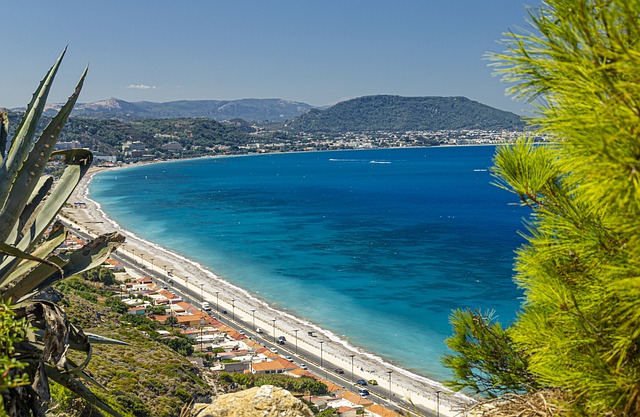
- Rhodes Town: If you’re visiting Rhodes Island, then head towards Rhodes Town for some vibrant atmosphere and plenty to see. The town is divided into two halves – the old town and new town. This medieval town is protected by two city walls, forming a ring around the town. Head to the old town to explore its beautiful alleyways and narrow streets or towards the new town and enjoy your time visiting some bars or restaurants.
- Island of Santorini: With an estimated 1.5 million annual visitors, the picturesque island of Santorini is one of the most visited and well known Greek islands. Its landscape is something of wonder, from cliffs, to coves and sandy beaches, not forgetting the crystal clear turquoise waters. The white washed towns with blue roofed domes, is the iconic depiction of Greece around the world.
- Island of Crete: Crete is the largest of all the Greek islands and as expected also a very popular place to visit. With plenty of coffee houses, bars, clubs and restaurants, during the day you can also enjoy many of its quaint stores and markets. By far Heraklion, the islands capital, is the most popular city to visit on the island. This Venetian influenced island has much to offer, including the popular Vai Beach and the port of Chania.
- Island of Mykonos: Known as the most glamorous of all Greek islands, Mykonos is a popular destination amongst celebrities and elites. During the summer time, many visitors are also attracted to its party atmosphere and lively entertainment. Paradise and Super Paradise Beach are the most popular on the island, with local nightclubs attracting world-renowned DJs.
What to do in Greece
Greece has an abundance of things to see and do, no matter which part you visit. From all the ancient monuments and archaeological wonders on the mainland, to the equally as tempting white sandy beaches, and crystal blue waters on its islands – Greece literally has it all and more to offer. These are the things we would recommend you seeing during your Greek holiday.
- City of Thessaloniki: Located on the Thermaic Gulf on the Aegeon Sea is the Greek port city of Thessaloniki. This vibrant port has plenty of interesting things to see, from the White Tower of Thessaloniki to the Aristotelous Square and the Arch of Galerious - there is plenty to entertain you. During your visit don’t forget to also see the iconic Orthodox Church and the Hagia Sophia.
- Town of Delphi: Located at the top of Mount Parnassus, the beautiful and legendary town of Delphi is a great place to visit. Delphi is an extremely popular location in Southern Greece, and thus you can expect plenty of tourists. With several historical attractions to visit, such as, the Temple of Apollo, Athenian Treasury and the Castalian Spring, you’re sure to enjoy your time here.
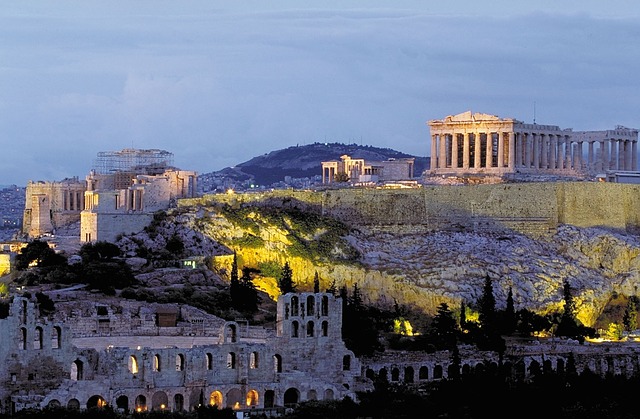
- The Acropolis: One of the most iconic monuments and a symbol of Greece, the Acropolis is perched high up overlooking the capital city Athens. As one of the most popular sites in Greece, expect plenty of activity and tourists. The Acropolis can be seen throughout Athens, especially at night when it is lit up. The statue of Athena once stood in the Acropolis as the patron saint of Athens. During your visit don’t forget to check out the Acropolis museum too.
- Theatre of Epidaurus: Located in the Greek city of Epidaurus, this great theatre is world renowned for its acoustic and aesthetics wonders. Dedicated to the Greek God of Medicine, Asclepius, this sanctuary is a great place to visit. At its height, the theatre could host up to 14,000 spectators, all of which would enjoy the numerous shows on offer. Nowadays, the theatre still hosts the occasional performance or music event.
- Monasteries of Meteora: Known as the largest religious Orthodox complex in existence, these Eastern Orthodox Monasteries are perched high above on some wonderful rock formations. A beautiful and serene place, it is often credited with keeping the Greek culture and tradition alive during the occupation of the Ottomans.
A bit of history
Located in the Mediterranean Sea, Greece is also commonly known as the Hellenic Republic or Hellas. It is bordered by Albania, North Macedonia, Bulgaria and Turkey. The mainland is generally mountainous with mild winters and hot summers. Along with its mainland, Greece also has over 1400 islands, many of which are extremely popular holiday destinations.
Dating back to the 8th Century BC, Greece was incorporated into the Roman Empire by the 5th Century. Alexander the Great pushed the Greek boundaries far into the Middle East, spreading its language and culture. Greece is said to be the birthplace of western civilisation, philosophy and democracy. As the Roman Empire grew, in the 4th Century it was divided into two halves – Rome the capital of the western half and Constantinople the capital of the eastern half of the empire. Constantinople was eventually conquered by the Ottomans and is presently known as Istanbul.
It wasn’t until 1821 that Greece declared independence from the Holy Roman Empire and followed its own path. During World War II, Greece saw many internal struggles, especially between the communists and western-backed government forces. Greece eventually leaned more towards the west. The Greek monarchy came to an end in 1967, but it wasn’t until 1975 that Greece became an official Republic. In 1981 Greece joined the European Union which helped it to grow. In 2007 with the global financial crisis, Greece was heavily affected; however, it has since seen some economic growth.
Frequently Asked Questions about travelling in Greece
Below is a selection of the most common questions asked by our customers in regards to travelling in Greece - questions about possible visa requirements, time zones, currency and much more. We also cover what things you should remember when choosing your car hire. If you can’t find an answer to the question you’re looking for, please contact one of our reservation agents. Our agents are well versed on what is required to drive in Greece, and on providing useful travel tips. Alternatively, consult our travel tips page for information on age restrictions, office locations and vehicle category types, to name but a few.
What type of car hire is best for your trip to Greece?
With our large selection of car categories to choose from, it can sometimes seem a little daunting as to what type of vehicle to hire. Ideally, you should take into consideration what you will be using the car for. If you’ll be primarily driving within the city, then we would recommend a smaller car. Our Mini and Compact categories are perfect for getting you through narrow streets and zipping around town.
Alternatively, if you’re thinking of heading into the Greek countryside, or more rural areas, then consider one of the SUV’s on offer. These cars are sturdy and have great on-road stability. If you’re going to be hopping between Greek cities, long drives from Athens to Alexandroupolis, for example, then a Large car category would be best – their powerful engines will make motorway driving easy.
Our car hire category information page will give further information on individual vehicle types, their maximum capacity, advantages and disadvantages.
What is the currency in Greece?
Greece is within the eurozone and as such its legal currency is the euro. It is possible to use your UK bank cards, however, this could become costlier due to conversion rates and fees. Some islands and restaurants do not accept payment by card, it is therefore advised to always carry cash on you. You may withdraw cash from ATM’s but this will charge for the privileged.
What time zone is Greece in?
Mainland Greece and its islands are located within the Eastern European Time zone, GMT +2, this makes it two hours ahead of the UK. Daylight Saving Time is applied from the last weekend in March until the last weekend in October.
Electricity – Do I need a power adapter in Greece?
Greece utilises a standard 230 voltage with a frequency of 50 H2. Throughout the country they use a Type C and Type F plug for all electrical equipment. Therefore, any UK equipment you wish to use whilst in Greece should accept a voltage between 220-240 volts. A European style two pin adapter is required for any UK appliances.
Do I need a visa to travel to Greece?
Currently a Visa is not required for British Citizens travelling to Greece. This may change after the Brexit transition period comes to an end, more information can be found here. A valid passport is required during your stay. For consular assistance you can find a UK Embassy in Athens, Vice-Consulates in Corfu, Crete and Rhodes, and an Honorary Vice-Consulate in Zakynthos. Contact details of all are as follows:
British Embassy Athens
1, Ploutarchou Str
106 75 Athens
Telephone: +30 2107272600
Email: information.athens@fco.gov.uk
British Vice-consulate Corfu
1st floor, 106 75 Athens
Greece
Telephone: +30 26610 2347
Email: information.athens@fco.gov.uk
British Vice-Consulate Crete
Candia Tower, 17 Thalita Street, Ag. Dimitrios Square
71 202 Heraklion
Telephone: +30 2810 224012
Email: crete@fco.gov.co.uk
British Vice-Consulatge Rhodes
29 Gr.Lambraki Street,
85 100 Rhodes, Greece
Telephone: +30 22410 22005
Email: rhodes@fco.gov.uk
Honary British Vice-Consulate Zakynthos
28 Foskolou Street
29 100 Zakynthos
Telephone: +30 26950 22906
Email: zakynthos@fco.gov.uk
Which are the most common phrases in Greek?
Hello - Yassou
Good morning - Kalimera
Good afternoon - Kalispera
Good evening - Kalispera
Do you speak English? - Milas Anglika?
How much does this cost? - Poso kani?
Thank you - Efkharisto
Useful Links
Travel tip - Exploring Northern Greece
- Home
- Car Hire Destinations
- Greece
- Greece Travel Information